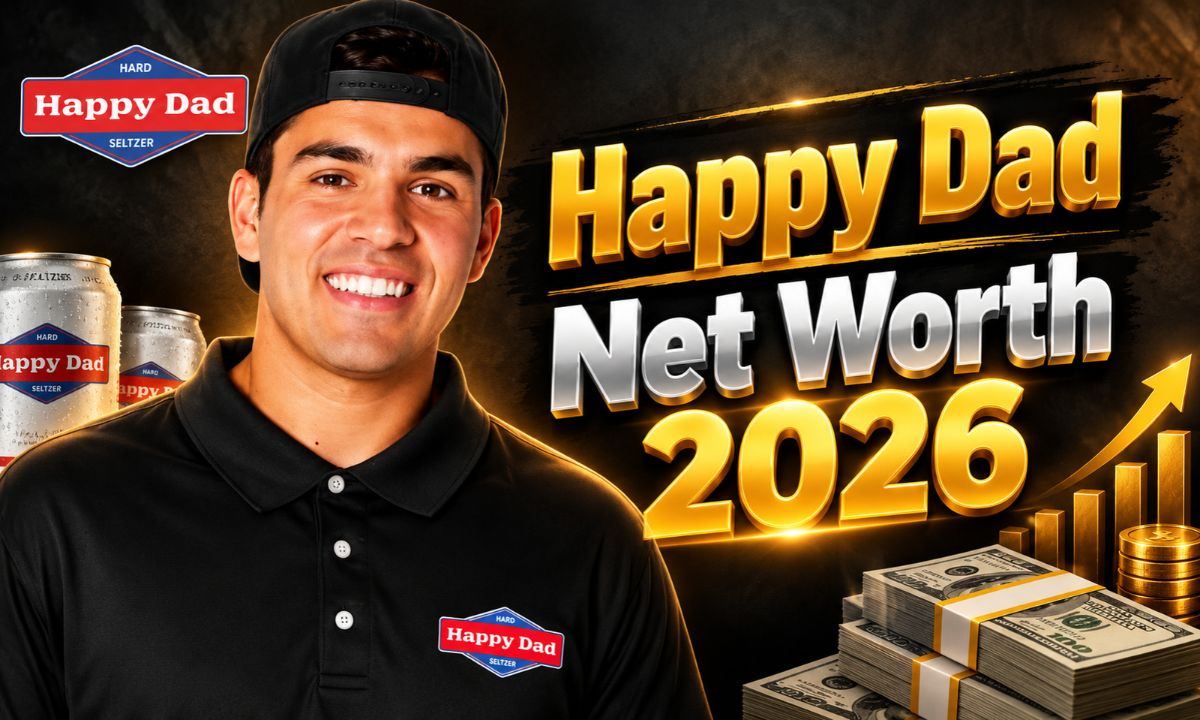
Happy Dad began as a side project from a YouTube crew and now sits in coolers across North America. So what is it worth today? Most 2026 estimates place the Happy Dad net worth between $250 million and $300 million, based on industry comparisons rather than disclosed company financials. This guide covers who owns the brand, how it earns money, what it tastes like, where you can buy it, and where it may go next. Every number here is an estimate unless stated otherwise.
Quick Bio
| Detail | Information |
| Brand | Happy Dad Hard Seltzer |
| Launched | June 2021 |
| Founders | Sam Shahidi, John Shahidi, Kyle Forgeard |
| CEO | Sam Shahidi |
| Alcohol content | 5% ABV |
| Calories | About 100 per 12 oz can |
| Brewing partner | Minhas, Monroe, Wisconsin |
| Estimated net worth | $250M to $300M |
| Estimated revenue | $80M to $100M (varies by source) |
Who Owns Happy Dad?
Sam Shahidi, his brother John Shahidi, and Kyle Forgeard, a co founder of the Nelk YouTube channel, founded Happy Dad in June 2021. Sam runs daily operations as CEO. John handles partnerships and the president role. Kyle brings the audience and the face of the brand.
Steve “SteveWillDoIt” Deleonardis is close to the group. Official materials list only the three founders, so his exact stake is not confirmed. Ownership percentages are private. The company also took outside money, since a venture investment from The Family Fund was reported in 2025. Even so, the founders still steer the ship.
How Happy Dad Became So Popular
Happy Dad did not win by accident. Several things lined up:
- A ready made audience of millions who already trusted the founders
- A bigger can and a smoother, less fizzy drink
- Simple flavors that anyone can pick without thinking
- Merch that turned drinkers into walking billboards
- Steady retail wins that built proof for new stores
Fans did not just buy a seltzer. They joined a club. That sense of belonging is hard to copy, and it drove repeat purchases.
Happy Dad’s Rise to Success
The brand grew fast in its first two years. Happy Dad sold more than 690,000 twelve packs in 2021 and more than 2.5 million the following year. Retail buyers noticed. In 2023, it ranked among the top five hard seltzer brands at Total Wine, according to IRI data.
Later, the company moved to a beer distribution network to reach more stores. That step matters because distribution decides how many shoppers can see a product. Success in this business is mostly about shelf space, and Happy Dad kept winning more of it.
Initial Struggles and Successes
The timing was not perfect. The hard seltzer category has lost around $1 billion in sales since its peak five years ago, and Happy Dad missed the best sales year. Many celebrity drinks also fail once the hype fades.
Here is how the early story played out:
- Launch in a crowded, cooling category
- Doubts about whether a creator brand could last
- Strong early sales that proved real demand
- Growth in stores that first ignored the brand
Sam Shahidi has argued that Happy Dad worked because it built its own identity instead of copying an old beer label. That focus helped it survive a slowdown.
Happy Dad Net Worth (2026)
Since the company is private, nobody outside it sees audited books. Analysts compare Happy Dad with similar drinks and apply revenue multiples. That is why the range is so wide.
| Estimate type | Value |
| Conservative commentary | About $50M |
| Revenue multiple method | About $100M |
| Brand equity method | $250M to $300M |
Commentators’ estimates run from about $50 million on the low end to $250 million or $300 million on the high end. The higher figure counts brand strength, growth, and future potential. The lower figure counts only what the company sells today. Treat the $250 million to $300 million range as a popular estimate, not a proven fact.
Inside the Business Model
Happy Dad keeps its model simple. It brews through a partner, sells through distributors, and lets retailers reach the shopper. The seltzer is produced and packaged at Minhas Breweries and Distillery in Monroe, Wisconsin. Using an existing brewery keeps costs lower than building a plant.
Key parts of the model:
- Bigger cans: Full size 16 oz cans give more drink for the price
- Low carbonation: A smoother sip sets it apart from rivals
- Electrolytes: A small extra that shows up on the label
- Merch: Hats, apparel, and accessories sold on the brand site
- Distribution: Beer wholesalers place cans in stores
Happy Dad Marketing and Brand Lifestyle
The brand sells a mood. Think tailgates, golf days, lake weekends, and backyard grills. The name itself feels friendly and a little funny. There is also a sister line called Happy Mom, plus themed merch for football, golf, and patriotic drops.
This lifestyle approach helps in two ways. Shoppers connect emotionally, and the logo becomes a status item. Shahidi has said the logo is now so popular that the brand no longer needs the Nelk crew to handle all its marketing. That is a big sign of brand strength.
Social Media and Viral Success
Happy Dad grew up online. Short clips, podcast mentions, and fan photos did the work that billboards do for older brands. The founders already knew how to hold attention, and they used those skills to sell cans.
Social Media Strategy
The plan is easy to describe:
- Show the product in real moments, not staged ads
- Let founders and friends drink it on camera
- Repost fan content so buyers feel seen
- Drop merch in limited runs to create buzz
The Nelk channel exposed the brand to an audience of mostly young men, and founders wore Happy Dad gear in videos. That steady exposure kept the name in front of buyers without heavy ad spending.
Viral Campaigns
Viral moments came from the crew’s stunts, podcast clips, and guest appearances. Some guests were controversial, which sparked debate but also boosted reach. Fans also shared photos of empty cans at parties and games. Free reach like this lowers the cost of winning each new customer.
Revenue and Brand Value
Industry estimates put annual revenue between $80 million and $100 million. Other writers claim higher, so treat any single figure with care.
| Metric | Estimate |
| Annual revenue | $80M to $100M |
| Brand value | $250M to $300M |
| Related Nelk apparel sales | Near $100M yearly |
Nelk sells almost $100 million of apparel every year, which shows how strong the fan base is. That loyalty supports the beverage value too. Brand value grows when fans buy again, wear the logo, and tell friends.
Comparisons to Competitors
Happy Dad still trails the biggest names in total sales. Shahidi once laid out a plan to pass Topo Chico, then Truly, and then compete with White Claw by 2027. Goals like this are bold, and they are not guaranteed.
| Feature | Happy Dad | White Claw | Truly |
| Market position | Fast riser | Category leader | Strong runner up |
| Can size | 16 oz option | 12 oz standard | 12 oz standard |
| Main appeal | Fan culture, smooth taste | Broad mainstream trust | Fruit flavors |
| Ownership | Founder led | Large corporation | Large corporation |
Key Insights from the Comparison
- Big rivals have more money, more reach, and more shelf space
- Happy Dad wins on identity and community
- Founder ownership means faster decisions
- Regional strength can beat national rank in some stores
The gap is real, but the brand has narrowed it in some areas.
Where Is Happy Dad Sold?
You can find it in grocery stores, liquor stores, convenience shops, and big chains. One product guide says it was sold in 34 U.S. states plus the District of Columbia, with select locations in Canada. Other sources claim wider reach, so distribution keeps changing.
Around 85% of Canadian sales go through government owned stores, and the brand has held the top selling single serve product in almost all provinces. The best move is to check the store finder on the official site before you go.
Happy Dad’s Founders and Vision
Sam Shahidi built his career in digital media and helped start Shots Podcast Network. He also worked in mobile games before that. Kyle Forgeard co founded Nelk and knows how to build a community. John Shahidi adds media and talent experience.
Their shared vision is direct: make a seltzer that tastes better than the category’s reputation and sell it in an honest, fun way. Sam described it as building the “Shake Shack” of seltzers while rivals copied fast food chains. That idea centers on quality, personality, and loyalty over gimmicks.
What Does Happy Dad Taste Like?
Most drinkers describe it as light, crisp, and easy. The brand says its seltzers offer low carbonation and a refreshing taste. That means less bloating and fewer sharp bubbles than many rivals.
Flavors lean fruity and simple. Watermelon is sweet and juicy. Lemon Lime is bright and clean. Wild Cherry is bold and a bit candy like. Pineapple feels tropical. Taste is personal, so try a variety pack before choosing a favorite.
What Alcohol Is in Happy Dad?
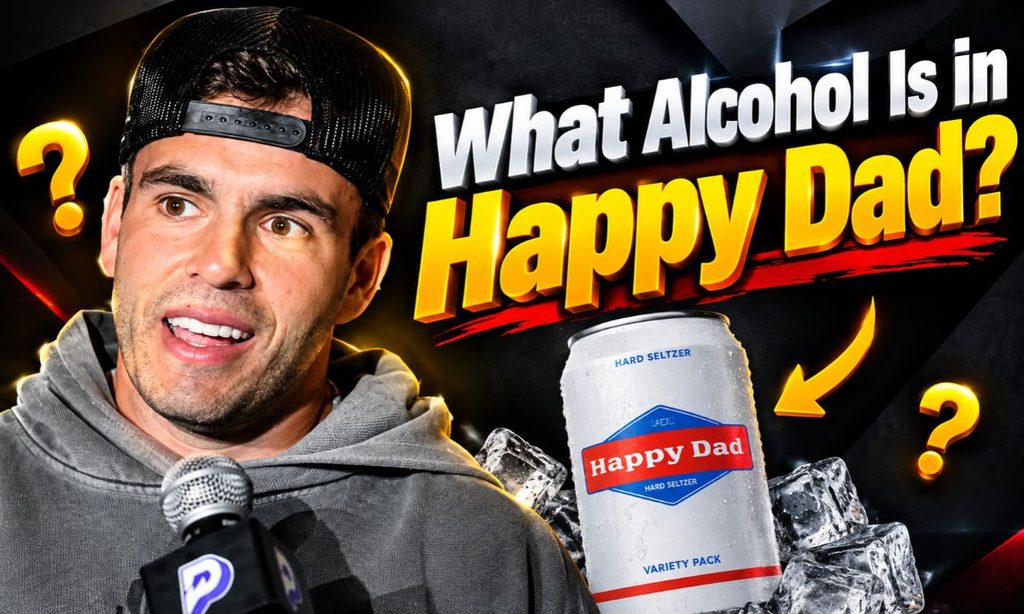
The base is ethanol made from fermented cane sugar. Happy Dad seltzers are primarily made with fermented cane sugar, giving a clean and crisp alcohol base. The ingredient list shows carbonated water, alcohol, natural flavor, cane sugar, citric acid, and electrolyte salts.
The strength is standard. Each can has 5% ABV, 100 calories, and 1 gram of sugar, and is gluten free. One 12 oz can counts as about one standard drink, so a full size 16 oz can holds more alcohol than that.
Tea, Flavors, and Fruit Punch
The lineup grew past the first four flavors. The portfolio now includes 13 seltzer and tea flavors, all at 5% ABV. The brand site also lists a lemonade and tea line.
Current flavors include:
- Wild Cherry
- Lemon Lime
- Watermelon
- Pineapple
- Fruit Punch
- Hard tea options
The tea drinks are not carbonated, which gives a softer sip than the seltzers. Fruit Punch suits fans who want a sweeter, party style flavor. Availability differs by state, so check local shelves.
Read More: Nicola Beckford Husband
Happy Dad’s Growth and Future Plans
The next chapter is about scale. Leaders want more states, more stores, and more Canadian growth. They also want new flavors and new drink types, such as teas and lemonade. Merch will keep supporting the brand between drinks.
Risks exist. Seltzer sales are shrinking as a category, and rivals have deep pockets. Fans can also drift if the brand feels stale. To keep growing, Happy Dad must keep quality high and keep surprising shoppers.
Happy Dad Net Worth in Perspective
A quarter billion dollars sounds huge, but context helps. White Claw and Truly sit under large corporate owners with much bigger sales. Happy Dad reached its current spot in only a few years, which is rare in alcohol.
Also remember that brand value is not the same as cash in the founders’ pockets. Debt, investors, taxes, and reinvestment all reduce what owners keep. So the founders’ personal wealth is a separate number from the company’s estimated value.
Happy dad net worth 2026
Happy Dad’s estimated net worth in 2026 is $250 million to $300 million. Some analysts say $100 million or less. The company is private, so no official figure exists.
FAQs
Who is the CEO of Happy Dad?
Sam Shahidi is the CEO. He handles strategy and daily operations, while his brother John serves as president.
Does Steve make money from Happy Dad?
Probably, through his ties to the Nelk circle and brand promotion. His exact ownership stake is not publicly confirmed.
Is Happy Dad a successful company?
Yes, by most measures. It grew from a 2021 launch to wide distribution and top brand rankings in several stores, despite a shrinking category.
Did Nelk sell Happy Dad?
No public evidence shows Nelk sold it. The founders are still widely named as owners in 2026.
Is Happy Dad a healthy drink?
No alcoholic drink is truly healthy. Happy Dad is lower in sugar and gluten free, but it should be enjoyed in moderation.
What is Happy Dad ranked in sales?
It ranks behind giants like White Claw and Truly overall. It has reached top five status at some retailers, such as Total Wine in 2023.
Is Happy Dad healthier than beer?
It has similar calories at the same strength but only about 1 gram of sugar, and it is gluten free. That makes it lighter, not healthy.
Happy Dad ownership percentage
Exact percentages are not public. The founders hold control, while minority investors hold smaller stakes.
Conclusion
Happy Dad turned a loyal online audience into a real beverage business. The $250 million to $300 million net worth estimate is popular, but it rests on brand value and guesses, not audited books. What is clear is the growth: strong flavors, a smart can size, deep community, and steady retail wins.
The future depends on keeping quality high and expanding without losing the fun that made it stand out. If you plan to buy it, check local availability, drink responsibly, and remember that all figures here are estimates from a private company.